

Falling behind on a mortgage is stressful, and the first thing most owners want to know is how much time they have left. In Florida, the answer depends on how fast the lender moves, how busy the local court is and whether you respond to the lawsuit. This guide walks through each stage of a Florida foreclosure in 2026, how many days each one usually takes, and what you can still do before the sale date.
Florida Foreclosure Length: The Short Answer
A Florida foreclosure rarely happens fast. Lenders usually cannot start the court case until you are more than 120 days behind, and the case itself goes through a judge before any sale. An uncontested case often wraps up within several months of the filing, while a contested one can drag on for a year or longer.
For context, homes foreclosed across the U.S. in the second quarter of 2026 had spent an average of 563 days in the process, the shortest stretch since 2013. Florida also posted the highest foreclosure rate of any state in the first half of 2026, so courts in many counties are busy.
The Florida Foreclosure Timeline, Step by Step
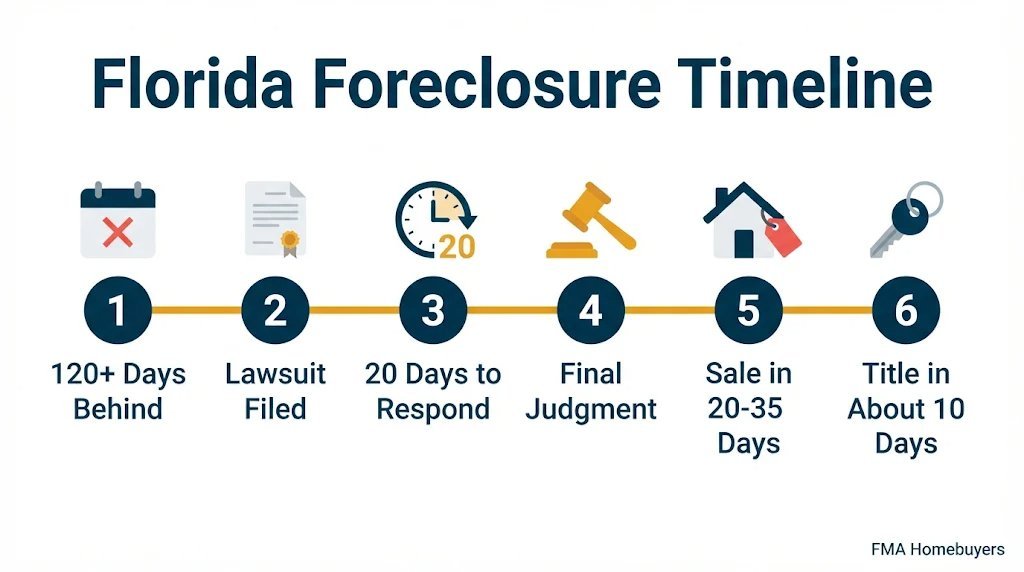
Florida uses judicial foreclosure. That means the lender has to sue you and win in court before your home can be sold.
Step 1: Missed Payments and the 120-Day Window
After one missed payment, your servicer will call and send letters. Under federal mortgage rules, most lenders must wait until you are more than 120 days late before they file the first foreclosure paper. This window is meant to give owners time to catch up or apply for help.
Step 2: The Lender Files the Lawsuit
Once that window passes, the lender files a complaint in the circuit court for your county. It also records a lis pendens, a public notice that the property is part of a lawsuit. A process server then delivers the summons and complaint to you.
Step 3: You Have 20 Days to Respond
Once the papers reach you, the court gives you 20 days to file a written answer. If you do nothing, the lender can ask for a default, which moves the case much faster. Filing an answer, even a simple one, usually slows the process and gives you more time to plan.
Step 4: Final Judgment
The lender then asks the judge for summary judgment or sets the case for a short hearing. If the court rules for the lender, it signs a final judgment of foreclosure that states how much you owe and orders a sale.
Step 5: The Foreclosure Sale
Florida law directs the clerk to hold the sale between 20 and 35 days after the final judgment, unless the lender agrees to a later date. Most counties now run these sales online. You can still win the house back by paying the whole judgment, but only up to the moment the clerk files the certificate of sale.
Step 6: Title Transfer and Leaving the Home
When the 10-day objection period after the sale passes quietly, the clerk hands the winning bidder a certificate of title. From there, the buyer can request a writ of possession, which lets the sheriff post a 24-hour notice for anyone still living in the house to move out.
| Stage | Typical time |
|---|---|
| Missed payments before filing | 120+ days |
| Answer deadline after service | 20 days |
| Lawsuit to final judgment | A few months to over a year |
| Final judgment to sale | 20 to 35 days |
| Sale to certificate of title | About 10 days |
| Writ of possession notice | 24 hours |
What Makes a Florida Foreclosure Faster or Slower?
- Responding to the lawsuit. A contested case takes longer than one that ends in default.
- Court backlog. Busy counties can take months to set hearings.
- Loss mitigation. A complete loan modification application sent on time can pause some steps.
- Bankruptcy. Filing triggers an automatic stay that halts the sale for a while.
- Paperwork problems. Missing documents or errors in the lender’s filings can push dates back.
Ways to Halt a Florida Foreclosure Before Auction Day
The earlier you act, the more choices you keep. The most common ones are:
- Reinstatement: pay the past-due amount plus fees to bring the loan current.
- Loan modification or forbearance: ask your servicer to change the terms or pause payments.
- Short sale: sell for less than you owe with the lender’s approval.
- Sell the house yourself: pay off the loan from the sale and keep any equity.
- Deed in lieu: sign the home over to the lender to end the case.
For a closer look at these choices, read what to do if you need to sell your house fast due to foreclosure and our guide to selling a house while behind on payments. If you live in South Florida, see how to stop foreclosure in Miami-Dade.
Why Many Owners Sell Before Auction Day
If your home is worth more than you owe, a sale is often the simplest exit. The sale pays off the mortgage, the court case is dismissed, and you keep the money left over instead of losing it at auction. The catch is timing, because a regular listing can take 45 to 90 days or more to close.
FMA Homebuyers buys houses for cash in the Florida counties we serve, including Duval, Volusia, Seminole, Pinellas, Polk and Miami-Dade. We can make an offer within 24 hours, buy the home as-is and close in as little as 7 days, which can beat a sale date that is only weeks away.
Is Your Florida Sale Date Getting Close?
Tell us about the house today, see a cash offer within a day and close ahead of the auction. We buy Florida houses as-is, with no repairs and no agent fees.
Conclusion
A Florida foreclosure usually takes several months and can run past a year, because the lender has to wait out the 120-day window, file a lawsuit and win a judgment before any sale. Once the judge signs that judgment, the sale follows within 20 to 35 days, so the best time to act is early. A HUD-approved housing counselor, your loan servicer or a local real estate attorney can walk you through what fits your case.
FAQs
How long after missing payments does foreclosure start in Florida?
Most lenders cannot file the lawsuit until you are more than 120 days behind. After that, the timing depends on the lender and the court.
Is it still possible to sell once the foreclosure case starts?
Yes. You own the home until the sale and certificate of sale, so you can sell it as long as the closing pays off the loan before the auction.
Do I have to move out as soon as the lawsuit is filed?
No. Most owners stay put until the sale is complete and the buyer obtains a writ of possession.
Can I get the house back after the judgment?
Yes, if you pay the full amount in the judgment before the clerk files the certificate of sale.